


The Sight Adjustment Study

Posted on October 30, 2011 by in Offense

The following research report was written by X&O Labs’ newest offensive researcher, Mike Kelly.  Coach Kelly is the former head coach of the Winnipeg Blue Bombers and has worked for the Philadelphia Eagles and Washington Redskins.  In this report, Coach Kelly discusses what he found when studying how coaches are using sight adjustments to combat pressures.  He also adds his own experiences and advice that you can use to take advantage of an aggressive defense.

By Mike Kelly,
Offensive Researcher,
X&O Labs

Today, offenses are faced with a plethora of defensive alignments and a multitude of pressures and coverages, but the integrity of
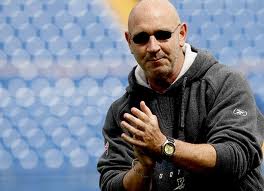
X&O Labs' Offensive Researcher, Mike Kelly, discusses his findings on how coaches are using sight adjustments to combat pressures.

defensive play remains constant.  A defense must maintain gap control and if one player vacates, another must replace.  It’s that simple.  Don’t get overwhelmed, just find the inherent weakness of each concept and prepare your players to read and react accordingly with what we like to call the “unspoken communication” of throwing the football.

With this in mind we posed the question of whether you ask your receivers to “sight adjust” their routes and do you incorporate structured “hot” throws into your passing schemes?  Over 300 coaches responded to the survey with nearly 80% currently coaching at the high school level.  The majority of the respondents (40.2%) possess the title of offensive coordinator and 26.5% are head coaches. 5% of the coach’s work on the defensive side of the ball leaving the remaining 27% as offensive positional coaches giving us a good perspective as to what presents difficulties in each aspect of offensive play.

The survey revealed that 40% of the respondents only incorporate “hot” schemes in 10% of their passing game with nearly identical percentages pertaining to a free release by the running back into the pattern.  These numbers coincide with the responses that 74% of high school coaches are seeing additional pressure players deployed in less than 10% of their passing situations.

So, obviously with these numbers, it is not an alarming rate at which additional pressure players are causing conflict to the pass game.  However, when blitz is presented, it is a tremendous opportunity for the offense to take advantage and make a quick strike.

I have always felt it is important that the receiving corps and the quarterbacks are educated in the same manner in terms of reading additional pressure players with pre-snap alignment and understanding the inherent weaknesses present in every coverage utilized.  The “eyes” need to be the same looking back as looking out to and from the secondary.

To keep this in its most simplistic form, the receiving corps and the quarterback need to locate the free safety and recognize his alignment.  Is he lower than usual?  Is he creeping over an area outside defender to assume that player’s coverage responsibility?  These triggers will alert your players to possible dog or blitz.  The receiver can verbalize the threat by yelling, “Possible, Possible!” As your receivers develop, the verbalization will no longer be necessary and they will adjust in unison.  Regardless of the play called in the huddle, a quick strike is executed upon the snap as pressure is immediately being executed.
Get Instant Access to X&O Labs’ Full Library of Game & Practice Video – Plus Full Length Reports and Interviews. Click Here!

“Smoke”:

It is noted that several coaches used a “west coast” style response to a coverage defender playing at depth with “smoke.”  The receiver will immediately turn his numbers to the quarterback on the snap. It is imperative that the receiver does not “drift” away from the throw or on either side of the line of scrimmage.  If anything, a step into the throw is what you’ll want.  Eighty-five percent of the respondents noted that they align their quarterback in the shot-gun in potential pressure situations and this allows for a better downhill throw providing the receiver with an opportunity to turn his shoulders up-field more readily.  The QB, who’s heels should be no deeper than four yards, must “grip it and rip it” urgently positioning his non-throwing shoulder towards his target with the side of the knee, side of the foot, short striding into the high elbow throw.


When pressure is presented and read on the run, sight adjusting routes to quick slants is a simple answer.  As your players develop they will be able to do this through daily repetition even if a run play was called in the huddle.  The key here is not to run the slant into the area that a defender is coming to replace. I have found from using this type of adjustment for 23 years to teach the adjusting route runner that on his second outside step, to plant hard and set a 45 degree angle inside.  This will keep the outside shoulder high fending off a closing defender from above and expose the near number as a target for the passer.  On his second inside step he will “sickle” up-field no longer advancing into an expanding defender but turning up the seam damaging the pursuit angle of the defender, keeping the receiver out of harm’s way, and moving toward the goal line.  I instruct the quarterback to deliver the ball on the hip to inside number of the receiver not out in front extending him into a potential big hit.

Hands Under Center:
The slant concept, I believe, is better served when the QB is positioned with his hands under the center.  I want my quarterbacks to think of themselves as “card dealers” and I want the “cards” in their hands right now to “deal” to the play makers.  By not having to look down to locate the snap, re-grip, and then relocate what is happening in terms of the applied pressure and the adjusting route, I have found the ball gets delivered with greater efficiency.  It is imperative that the quarterback’s first step separates him from the center with a far reach, the second step keeps him tall as a balance step, and the third step is a “T” step which he can drive off of into the throw.  Depending on the size, strength, poise, and experience of your quarterback, you can develop him to make a high elbow throw in this back-pedal with the knowledge that the ball must be delivered in one to three steps into the pressure.  It will also provide an opportunity to deliver the ball to your tight end quickly as he releases past the end man on the line of scrimmage and urgently “peeks” back to the QB regardless of whether he is up the seam, crossing, or to the flat.

Putting the hands under center also provides the opportunity for a quick dive.  Defenses are taking more alignment chances than ever because of the shot-gun’s lack of an immediate dive run threat.  We have seen in recent weeks over-loads outside of the 7-technique with a 0-technique as the only inside defender and then they drop into their respective coverage responsibilities against the gun but if they attempted that with hands under, a check to a dive will have the ball carrier looking one-on-one with the free safety.  My recommendation is to mix hands under with the gun to keep the defense out of such alignments.

MOFO/MOFC Concepts:
Many coaches referred to Middle of the Field Open (MOFO) and Middle of the Field Closed (MOFC) concepts.  This is a big part of our weekly third down synopsis designing and selecting patterns to take advantage of MOFO.  Curl/flat is such a staple of any passing game and is perhaps the easiest high/low stretch for a quarterback to read but it is also easily adjusted to allow a receiver to ‘take the hole.” Initially, I used the boundary side curl runner to convert to a post and attack the middle of the field and as time went by I would alternate by quarter of play boundary or field side curl route runner to take the hole.  If I have the ball in the middle of the field then the receiver on the back-side of the quarterback’s dominant hand is given the responsibility to go to the post as we believe it is an easier angle to deliver the ball with the receiver running through the throw.

Structured “Hots”:
We asked what percentage of your passing game incorporates structured “hots” and found that most of you have some form of a package primarily integrating a free releasing running back. Most comments addressed sending the RB to check down, flat, flare, or bubble.  Personally, I tend to be more aggressive and send the running back up the field particularly taking man coverage responsibility players out of their level of comfort.

Protecting the quarterback obviously is paramount in satisfactorily executing a pass offense.  When throwing hot, I want my QB to be responsible primarily to the hot, viewing the additional pressure player without worry of the off-side.  To achieve this, I was able to use our fullback as a check release receiver off the weak-side backer and our tailback as a free release receiver into the pressure warranting coverage by the defense in the form of a linebacker, free safety, or force them into zone concepts which our package floods.  If I go to a 3×1 with a single back, the #3 receiver adopts the route of the running back and the single back now check releases off the weak-side backer.

Your line is accountable for the four down linemen and the middle backer.  They are given the directive to quick set because although this comes from our five step drop package, the ball could be delivered in one to three steps.  This is an aggressive pass set as we attempt to keep “big and firm” thinking area front-side and big man on big man back-side.  The onside tackle must cut the most dangerous man.  The uncovered onside lineman has the double read inside over outside, which gives your quarterback added comfort knowing that although he is responsible for the additional pressure player, added force is coming from its furthest point and can still be engaged.

The quarterback’s eyes will travel the triangle from the free safety to the area outside defender to the end man on the line of scrimmage. If you are in a two back set motioning the running back into his free release will assist the quarterback in determining man or zone concepts as will using extended motion with a slot from a single back set moving from a 2×2 to 3×1.

Put together pattern combinations that are most comfortable for your quarterback to read and your receivers to execute will flood the presented zone concepts the opponent will utilize.

I have experienced success running the RB or the #3 receiver up the seam.  If the defender located over that player steps toward the line of scrimmage on the snap of the ball, the QB immediately delivers to that inside receiver in one to three steps if his hands are under center.  If you prefer the shot-gun, he must deliver with the “grip it and rip it” technique described earlier. If the defender steps out, laterally to the line of scrimmage, the ball is delivered to the second receiver as #3 becomes a natural rub.  When the defender drops, this gives a zone read.  Now the quarterback knows to continue with his five step drop and flood the zone allowing the shot-gun positioned QB to bounce back two steps and then hitch one into the delivery permitting the high/low stretch to mature.  Read the area outside defender that you have flooded with your combination route.

Put any combination route together to combat the predominant coverage schemes you will face.  Run #3/RB up the seam, #2 to the flat, and put #1 on a curl, as an example, and then modify the pattern by using the suffix “switch” that speaks directly to #3/RB and #2 exchanging their responsibilities in the flooded pattern, creating additional personnel mismatches and often causing “in and out” call conflicts so that now #2 is up the seam, #3 is to the flat, and #1 continues with his curl.   The read does not change for the QB and the ball is delivered within the same definitions.

Adding integrity to this scheme is the ability to run the football.  Provide the defense with the same look and continue your ability to throw “hot.”  The #3/RB remains “hot” to the called side and we encourage the use of motion once again.  The remaining back in the backfield whether it is the single back in a 3×1 or the fullback from a two back alignment, pass sets and it is his responsibility to ‘fit” to the quarterback.  He reads the defensive tackle and runs to daylight.  The center and both guards quick set and attack while the tackles show pass and open on the line of scrimmage.  If the defensive end takes an outside course, the tackle pushes off and blocks the outside linebacker.  The quarterback’s drop and read remains the same.  If the “hot” read presents itself, deliver the football, otherwise, separate from the center and on your fourth step the fit will now be made with the ball carrier, from the gun bounce once and then exchange.  Remember that a full reverse pivot is required on that fourth step if the hand-off is being made opposite of the quarterback’s dominant hand.  Run #2 and #1 on go routes to take the top off the coverage.

Conclusion:
This approach to throwing the ball doesn’t necessitate a need for hand signals or requiring an audible on the line of scrimmage.  It is all built in and relieves some pressure on a young quarterback dispersing equal accountability on all involved passing the football.  It also sets a confident mindset for your offense that you have answers to respond to aggression by aggressively throwing the ball down the field rather than laterally, providing opportunity for big plays.

Questions or Comments? X&O Labs’ offensive researcher, Mike Kelly, will be available to answer any question you have on this report.  Please post your question or comment in the “Comments” section below and Coach Kelly will respond shortly.

Copyright 2011 X&O Labs

Tags: , , , , , , , , , , , ,

One Response to “The Sight Adjustment Study”

  1. gary brewton 3 April 2012 at 11:15 am #

    coach – love the report. i use many of the same concepts. i really llike to free release the back — most of the time to get a horizontal stretch to open a throwing lane inside where that LB/SS player vacated. i do like to go vertical with him too – to get the ‘under’ route open early for a quick throw!

    thanks for the info!


Leave a Reply

Please fill the required box or you can’t comment at all. Please use kind words. Your e-mail address will not be published.

Gravatar is supported.

You can use these HTML tags and attributes: <a href="" title=""> <abbr title=""> <acronym title=""> <b> <blockquote cite=""> <cite> <code> <del datetime=""> <em> <i> <q cite=""> <strike> <strong>